SpaceX IPO 2026: What It Means for AI, Grok & Starlink
SpaceX's $1.75T IPO is also an AI story: it now owns xAI and Grok and is building orbital data centers. See what it means for AI buyers and Grok pricing.
On this page
SpaceX went public on Nasdaq on 12 June 2026. It listed under the ticker SPCX at $135 a share, a valuation of roughly $1.75 trillion and the largest IPO in history. For anyone tracking artificial intelligence, this matters for a reason most headlines miss. SpaceX now owns xAI and the Grok chatbot, and it is turning Starlink into orbital AI infrastructure.
In other words, the biggest space listing ever is also one of the biggest AI events of the year. Here is what the SpaceX IPO means once you look at it through an AI lens.
The SpaceX IPO at a Glance
SpaceX filed confidentially with the U.S. Securities and Exchange Commission on 1 April 2026. It then priced the offering at a fixed $135.00 per share and began trading on Nasdaq on 12 June 2026. The deal sold about 555.6 million shares and raised around $75 billion, more than double Saudi Aramco's 2019 record.
| IPO Detail | Figure |
|---|---|
| Ticker | SPCX (Nasdaq) |
| Offer price | $135.00 per share |
| Shares sold | About 555.6 million |
| Amount raised | Roughly $75 billion |
| Valuation | About $1.75 trillion |
| Milestone | Largest IPO ever recorded |
The market reaction was immediate. SPCX was indicated to open near $172, well above the offer price, pointing to a strong first-day pop. Reported figures still vary slightly across outlets, so treat the exact raise and opening level as approximate until the final numbers settle.
Why the SpaceX IPO Is Really an AI Story
Most coverage frames SpaceX as a pure space play built on rockets and satellite internet. That view is now out of date. Over the past year, Elon Musk pulled three of his companies into one structure, and the result sits at the heart of the AI race.
SpaceX today combines three things that frontier AI needs at the same time:
- Compute: Through xAI and the Grok model family, it owns a frontier AI lab.
- Energy and orbit: Through its launch business, it can put hardware into space cheaply and repeatedly.
- Connectivity: Through Starlink, it runs a global network that can move data to and from those satellites.
Musk has described the combined group as a vertically integrated engine that controls chips, energy and orbit end to end. The bet is that owning every layer produces a cost advantage that software-only AI rivals cannot easily copy.
Grok Joins the Rocket Company: The xAI Merger
The pivotal move came on 2 February 2026, when SpaceX acquired xAI, Musk's AI company and the developer of Grok, in an all-stock deal. As reported by CNBC, the transaction valued SpaceX at about $1 trillion and xAI at roughly $250 billion, for a combined $1.25 trillion. At the time it was described as the largest merger ever.
The timing was striking. Just weeks earlier, in January 2026, xAI had raised around $20 billion at a reported valuation near $230 billion. Folding that into SpaceX meant the IPO investors are now buying a space company and a major AI lab in a single ticker.
What SpaceX Now Owns in AI
After the merger, xAI was absorbed into a SpaceX division sometimes referred to as SpaceXAI, bringing several assets under one roof:
- Grok models: Grok 4 scored 91.7% on the AIME 2025 mathematics benchmark, and Grok 4.1 Fast targets agentic workflows with a 2-million-token context window and an Agent Tools API.
- A large user base: Grok features reached an estimated 117 million monthly active users by March 2026, helped by deep integration with the X platform.
- Fast-growing revenue: Grok generated about $350 million in 2025, with some estimates pointing to roughly $2 billion in 2026.
The catch is cost. xAI reported a net loss of about $1.46 billion in the third quarter of 2025 alone. Training Grok 4 reportedly ran to hundreds of millions of dollars in compute. That spending is why control of cheap launch capacity and orbital power appeals to Musk.
Starlink as AI Infrastructure
Starlink is the financial anchor of the whole story. It generated an estimated $10.6 billion in revenue in 2025, around 67% of SpaceX's total of about $18.67 billion, with healthy adjusted earnings. The constellation has grown to more than 9,800 operational satellites serving over 10 million subscribers across more than 100 countries.
For AI, Starlink is more than consumer broadband. It is becoming the data backbone for compute that runs in space, linking orbital hardware to ground stations through a laser mesh network.
Orbital Data Centers and the AI1 Satellite
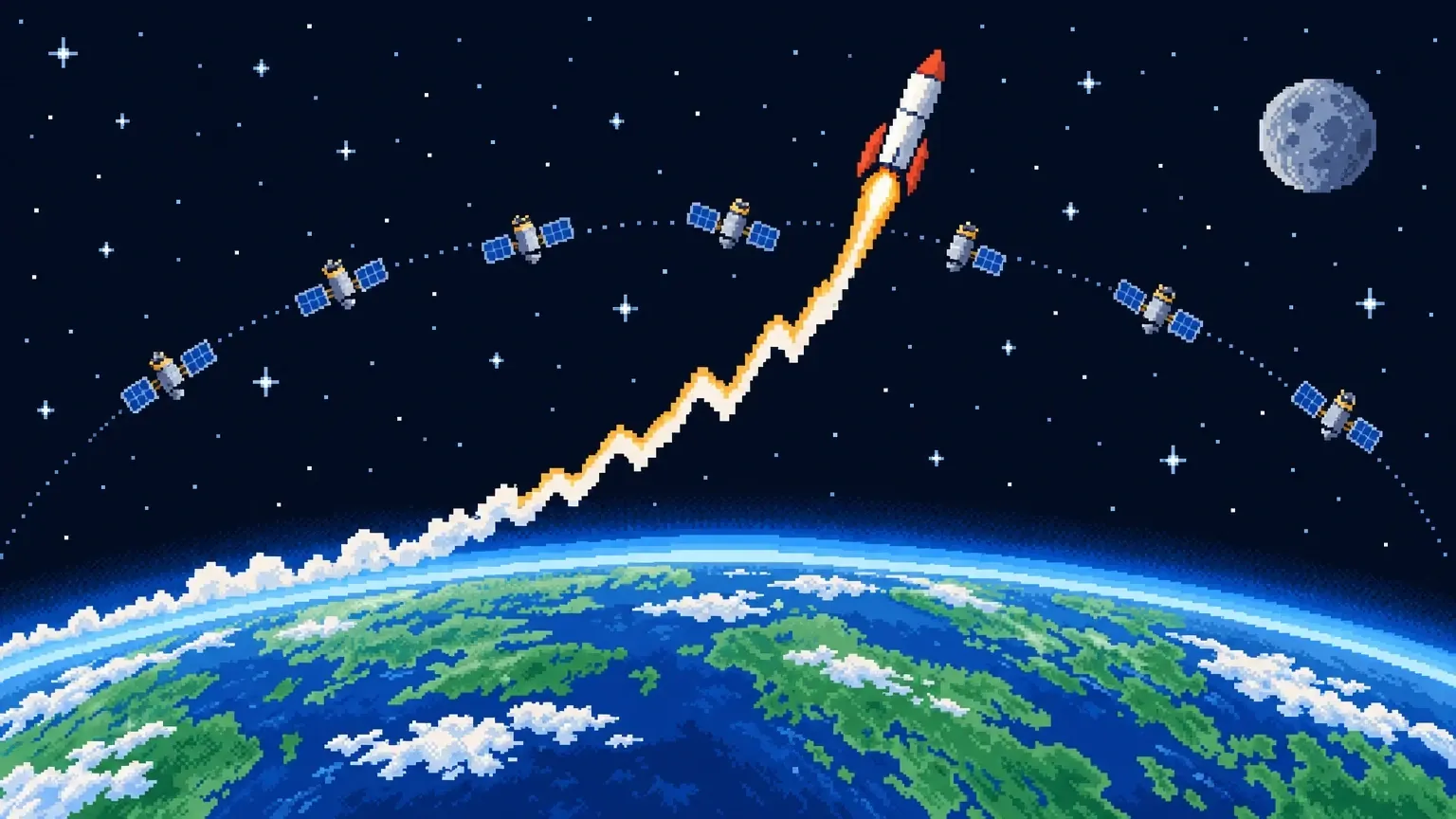
In January 2026, SpaceX filed plans with the Federal Communications Commission for a constellation of millions of satellites to extend cloud and AI computing into orbit. In June 2026 it revealed the first version, a satellite called AI1.
The headline specifications give a sense of the ambition:
- Compute power: About 150 kW at peak and 120 kW on average per satellite.
- Scale: A wingspan of roughly 70 meters, wider than a Boeing 747.
- Manufacturing: A new Gigasat factory in Bastrop, Texas, with potential for over 11 million square feet of space.
- Target: Around 1 gigawatt of orbital AI compute capacity by the end of 2027.
The pitch is simple. Space offers near-constant solar power and free cooling. That could one day make AI training and inference cheaper than it is on the ground. The promise is still unproven, but the IPO gives SpaceX the capital to test it.
What the IPO Means for AI Buyers and Developers
If you build products on AI APIs, the SpaceX IPO is not just market news. It signals that a well-funded, vertically integrated competitor now sits alongside the established model providers. It brings its own chips strategy, its own network and a public-market war chest.
Three practical takeaways stand out:
- More competition on price: A player that owns its own infrastructure has room to compete aggressively on cost per token over time.
- A broader Grok roadmap: Tighter funding and orbital compute could speed up Grok releases and expand its context and tooling features.
- Concentration risk: More of the AI stack, from models to connectivity, now sits inside one company, which is worth weighing when you choose a provider.
Where Grok Fits in the API Pricing Race
Grok is one of several frontier models competing on capability and price, alongside Claude, GPT, Gemini and others. The merger does not change Grok's pricing overnight, but it does change the long-term economics behind it. The cheaper SpaceX can make compute, the more flexibility it has on what it charges developers.
If you are weighing Grok against other models, compare current token prices side by side rather than trust headlines. You can do that with the interactive calculator and comparison tables at compareai.today, which tracks API pricing across ten leading providers, including Grok.
Fun Fact: An AI Satellite Wider Than a Jumbo Jet
SpaceX's first orbital data-center satellite, AI1, has a wingspan of about 70 meters, wider than a Boeing 747. Yet Musk claims it is "much simpler than a Starlink satellite" to build. It mostly needs solar panels, chips and a radio link, not the complex steering hardware of a broadband satellite.
The Valuation Debate and Key Risks
Not everyone is convinced by the price tag. Analysts at Morningstar have questioned whether the roughly $1.75 trillion valuation is justified. Some fair-value estimates land closer to $500 billion to $1.1 trillion. The bull case rests on reusable rockets cutting launch costs sharply, recurring Starlink revenue and the long-term promise of orbital AI compute.
The risks are real, though. The AI division is still loss-making, and orbital data centers are unproven at scale. Bundling rockets, satellites, a social platform and a frontier AI lab into one stock also makes SPCX a complex bet. As always, treat fast-moving IPO figures with care, and check primary sources before acting on them.
The Bottom Line for the AI Market
The SpaceX IPO is a landmark for space investing, but it is also a turning point for AI. A single public company now owns a frontier model in Grok, a global network in Starlink and a plan to put data centers in orbit. Whether or not the $1.75 trillion valuation holds, the competitive map for AI just shifted.
For buyers and builders, the lesson is simple: the AI landscape changes fast, and so does pricing. Keep an eye on how Grok evolves under SpaceX, and compare it against rival models on cost and capability before you commit. You can start that comparison today at compareai.today.